
The Autumn Adjustment: Preparing Your EV Charging Strategy for Shorter Solar Days
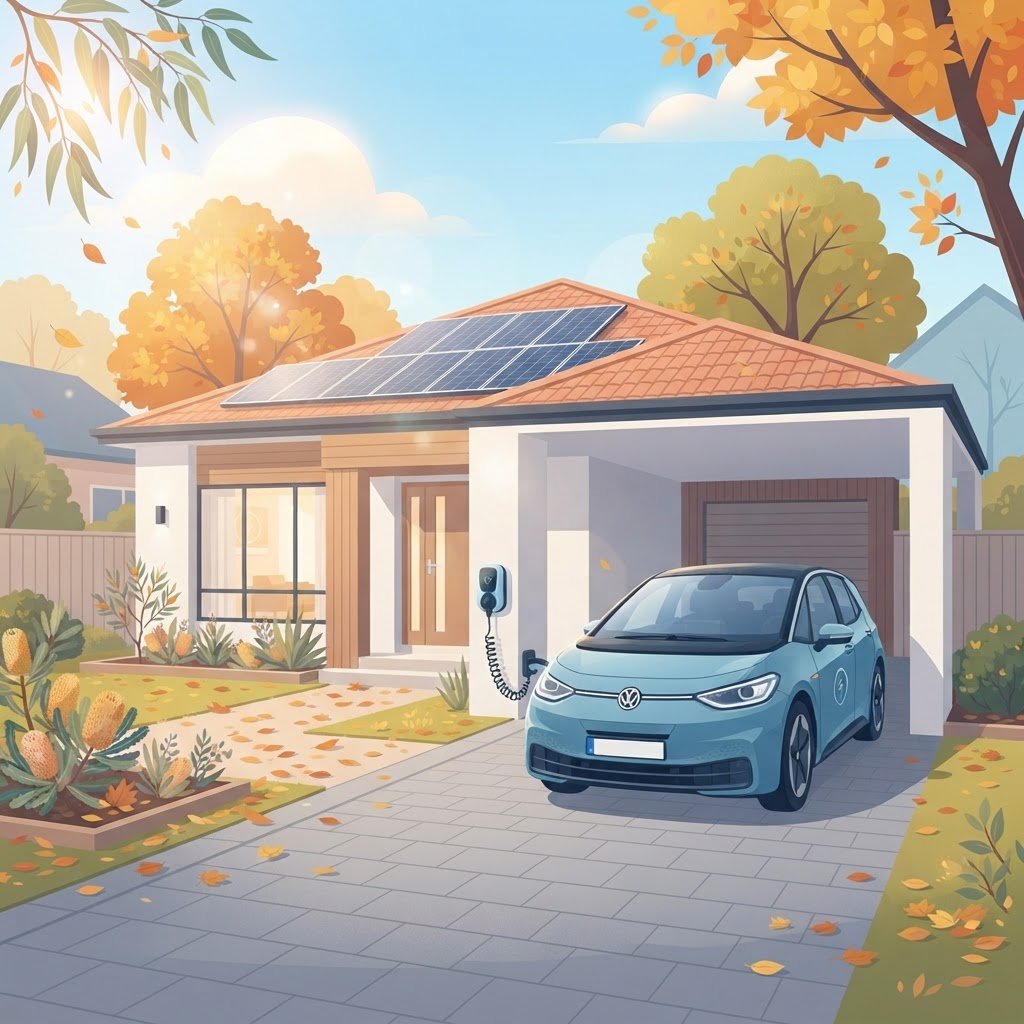
The Seasonal Shift is Upon Us
For many Australian EV owners, summer is the 'golden hour' for energy management. With long days and high solar export rates, many of us fell into a comfortable rhythm of plugging in around midday and letting the roof panels do the heavy lifting. But as we move into the shoulder seasons and eventually winter, the solar yield is dropping.
If you are still relying on a 'set and forget' midday charging routine, you might notice your electricity bills starting to climb. Here is how to audit your charging habits for the changing seasons.
Rethink Your 'Golden Hour'
In the height of summer, 11:00 AM to 3:00 PM is the sweet spot. As daylight hours shorten, that window is shrinking.
Watch the Export Peaks
Your solar inverter doesn't care about your battery percentage. If you are on a plan with dynamic feed-in tariffs—like those offered by Amber Electric—you might find that your 'cheapest' charging times are no longer just when the sun is brightest.
- Monitor your local cloud cover: Use apps like Solar Analytics to see when your generation actually dips.
- Shift, don't stop: If you can’t charge during the peak of solar, try to shift your charging to the shoulder periods of the morning or late afternoon.
- Utilise Smart Charging: If you have a Zappi, Wallbox, or a native EV smart-charging app, update your scheduled charging windows to reflect the new sunrise and sunset times.
The Role of 'Time-of-Use' Tariffs
As solar production decreases, your reliance on the grid will naturally increase. Now is the perfect time to review your retail plan. Are you still on a flat-rate plan? If so, you are likely missing out on significant savings.
Most major retailers like Origin, AGL, and OVO offer specific EV plans that provide heavily discounted rates during the 'off-peak' windows, typically between midnight and 6:00 AM. In the winter months, these overnight rates are often cheaper than the 'net cost' of using your own solar when you factor in the lost feed-in tariff (FiT) revenue.
Audit Your 'State of Charge' Limits
We often suggest keeping your EV between 20% and 80% for daily usage, but during the cooler months, being slightly more 'aggressive' with your charging strategy can pay off.
Strategy Tip: If the forecast shows a week of heavy cloud cover, don't wait for your battery to hit 20% before charging. Use the weekend—when grid demand is often lower and prices are sometimes better—to perform a 'top-up' charge during the cheapest price windows. By keeping your battery buffer higher, you avoid having to initiate a 'panic charge' during expensive evening peak times (usually 5:00 PM to 9:00 PM).
Use Your EV as an Energy Buffer
If your EV supports Vehicle-to-Load (V2L) or you have a home battery system, the seasonal transition is the best time to test your system’s integration.
- The V2L trick: If you are running high-drain appliances like portable heaters in the evening, consider if your EV can power them directly via V2L, rather than pulling power from the grid during peak pricing hours.
- Check your VPP status: If you are part of a Virtual Power Plant, ensure your participation settings are optimized for the autumn grid. Some VPPs will trigger events more frequently as the grid struggles with early-evening heating demand.
Final Thoughts: Stay Agile
The key to being an 'EV Utility' pro in Australia is agility. Our grid is changing, and so is our weather. Don't be afraid to tweak your charging schedule every few weeks as the seasons turn. By staying ahead of the solar curve, you ensure that your electric vehicle remains a source of savings rather than a seasonal cost spike.
Stay charged, stay smart, and enjoy the cooler driving weather!